Luxury Apartments vs Luxury Villas
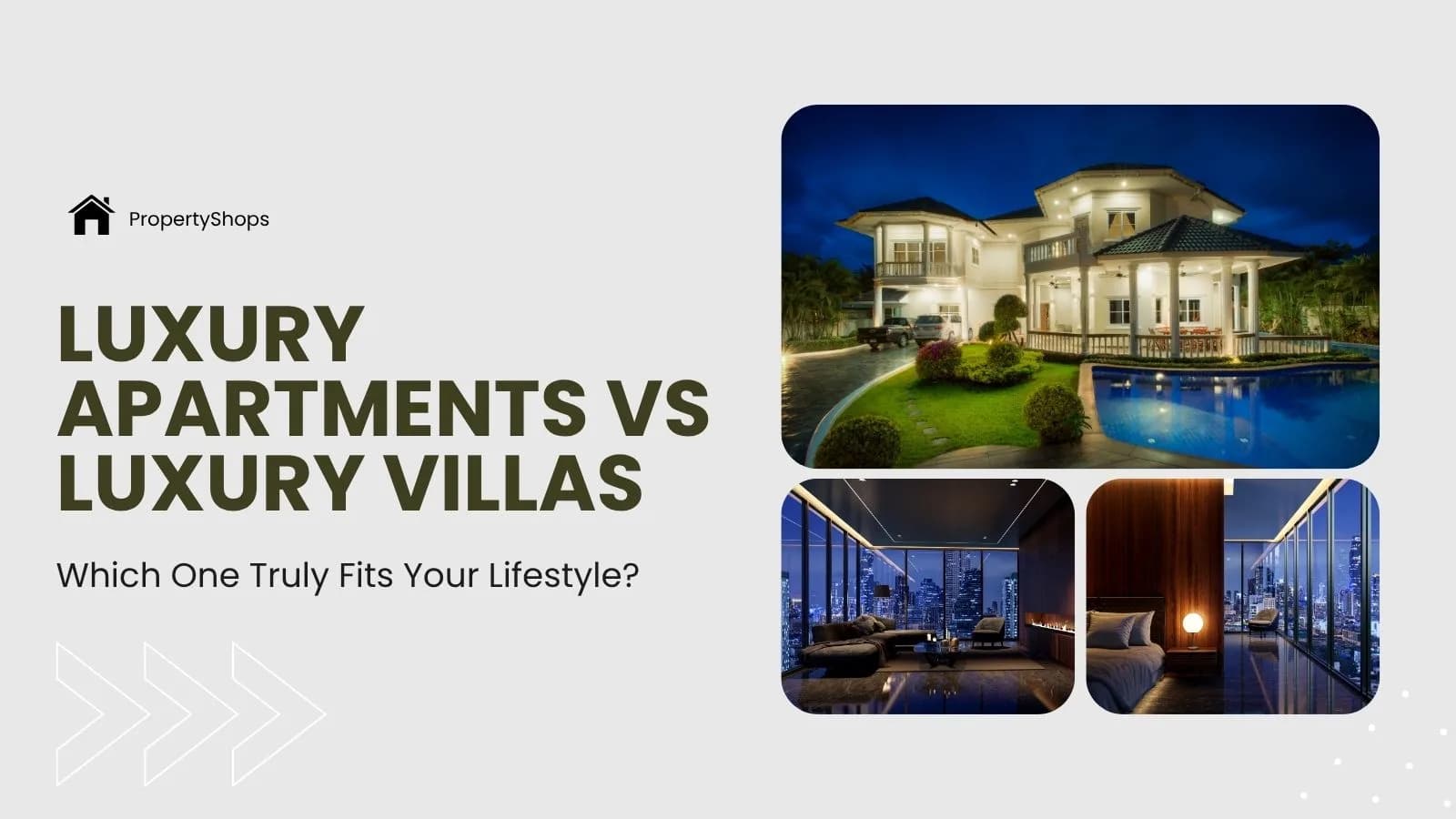
Luxury Apartments vs Luxury Villas: Key Differences, Pros & Cons
Choosing where to live isn't just about square footage and square footage isn't the same as home. It's about how you'll wake up every morning, whether you'll hear your neighbor's footsteps through the ceiling, and whether you'll ever get to grow your own garden. For many home buyers, the decision between luxury apartments vs luxury villas becomes surprisingly emotional one path offers convenience and community, the other offers privacy and space, and picking wrong can mean years of quiet dissatisfaction with a home that never quite feels like "yours."
If you've spent weeks scrolling through property listings, torn between a sleek high-rise apartment with a skyline view and a sprawling villa with its own driveway and garden, you're not alone. This guide breaks down the real differences from cost and maintenance to lifestyle and long-term value so you can make a confident, informed decision instead of a rushed one.
What Is the Difference Between Luxury Apartments and Luxury Villas?
Luxury apartments are premium residential units within a multi-story building, typically offering shared amenities, professional security, and lower maintenance responsibility.
Luxury villas are standalone or semi-detached private homes with dedicated land, offering greater space, privacy, and customization but requiring higher personal upkeep and investment.
This core distinction shared vertical living versus private horizontal living shapes nearly every other factor in the comparison, from pricing to daily lifestyle.
Luxury Apartments: Pros and Cons
Pros of Luxury Apartments
- **Prime locations — **Apartments are typically built in city centers or business districts, cutting commute times significantly.
- Lower maintenance burden — Facility management teams handle repairs, landscaping, and security.
- Built-in amenities — Pools, gyms, co-working lounges, and concierge services come standard in most premium developments.
- Enhanced security — Gated entry, CCTV, and 24/7 staff are common in high-rise developments.
- Better resale liquidity — Urban apartments tend to attract a broader buyer and renter pool.
Cons of Luxury Apartments
- Limited private outdoor space (balconies rather than gardens).
- Shared walls can mean noise from neighbors.
- Society rules may restrict renovations or pet ownership.
- Monthly maintenance fees add to the ongoing cost of ownership.
A working professional relocating for a demanding job often prioritizes a luxury apartment near their office trading garden space for a shorter commute and hassle-free upkeep, since they simply don't have time to manage a standalone property.
Luxury Villas: Pros and Cons
Pros of Luxury Villas
- Complete privacy — No shared walls, elevators, or common corridors.
- More space — Multiple floors, private gardens, and sometimes a private pool.
- Customization freedom — Owners can renovate, extend, or redesign without approval from a housing society.
- Land appreciation — Villas include land ownership, which historically appreciates well in growing markets.
- Family-friendly — Ideal for multi-generational households needing more room.
Cons of Luxury Villas
- Higher maintenance responsibility (gardening, exterior upkeep, security arrangements).
- Often located farther from city centers, increasing commute time.
- Higher upfront and ongoing costs, including utilities for larger spaces.
- Smaller resale market compared to apartments in the same city.
A retired couple looking to downsize their responsibilities but upsize their peace often chooses a villa in a quieter, semi-urban community prioritizing garden space and silence over proximity to nightlife or offices.
How to Choose Between a Luxury Apartment and a Luxury Villa
Follow these steps to make a confident decision:
- Define your lifestyle priorities. List whether privacy, community, or convenience matters most to you.
- Calculate the total cost of ownership. Include maintenance fees, property taxes, and utility differences, not just the purchase price.
- Assess your commute tolerance. Villas are often farther from business hubs; apartments are usually closer.
- Consider your family size and future needs. Growing families often outgrow apartments faster than villas. 5.** Evaluate resale and rental demand** in your target city — some markets favor villas, others favor apartments.
- Visit both property types in person before deciding; photos rarely capture noise levels or natural light accurately.
Cost Considerations: Which Is More Expensive?
Luxury villas typically carry a higher overall purchase price due to land ownership, but a lower price per square foot compared to apartments in prime urban zones. Apartments, on the other hand, often cost more per square foot because of location premiums and shared amenity infrastructure, even though the total price may be lower.
Ongoing costs also differ:
- Apartments — Fixed monthly maintenance fees, often covering security, cleaning, and amenities.
- Villas — Variable costs for gardening, private security, exterior maintenance, and larger utility bills.
According to real estate industry observations, buyers should budget an additional 1-2% of property value annually for upkeep, regardless of the property type, though villas tend to sit at the higher end of that range due to exterior and land maintenance.
Common Mistakes Buyers Make
- Underestimating maintenance costs, especially with villas.
- Ignoring commute time when a villa's location looks appealing on paper.
- Overlooking resale demand in the specific micro-market.
- Not visiting the property at different times of day to check noise, light, and traffic patterns.
- Focusing only on price per square foot instead of total lifestyle fit.
Expert Recommendations
- Always verify the developer's or builder's track record before purchasing either property type.
- Factor in society/community rules for apartments and local zoning regulations for villas before finalizing.
- If undecided, consider renting each property type for six months to a year before committing to a purchase — lifestyle fit often becomes obvious with lived experience.
- Consult a licensed real estate advisor or property lawyer to review legal titles, especially for villa land ownership documents.
The debate over luxury apartments vs luxury villas doesn't have a universal winner — it comes down to how you want to live. Apartments suit those who value convenience, security, and low-maintenance urban living, while villas reward those who prioritize space, privacy, and long-term customization. Weigh your lifestyle needs, budget, and future plans carefully, and if possible, experience both settings firsthand before making your final decision.
Ready to explore your options? Start by shortlisting a few properties of each type in your preferred location and compare them side by side your ideal home is closer than you think.
FAQs:
Q.1 What is the main difference between luxury apartments and luxury villas?
The main difference is structure and privacy: luxury apartments are units within a shared building with communal amenities, while luxury villas are standalone or semi-detached homes with private land and greater independence.
Q.2 Why do luxury villas cost more overall than apartments?
Luxury villas cost more overall because the price includes land ownership, larger built-up area, and private amenities, unlike apartments where costs are spread across the building's shared infrastructure.
Q.3 How does maintenance differ between luxury apartments and villas?
Apartments have lower personal maintenance since a facility management team handles repairs, security, and landscaping. Villas require owners to personally manage or outsource gardening, exterior upkeep, and security.
Q.4 When should I choose a luxury apartment over a villa?
Choose a luxury apartment if you prioritize proximity to work, minimal maintenance, strong security, and access to shared amenities like pools and gyms without personal upkeep responsibilities.
Q.5 Can a luxury apartment offer the same privacy as a villa?
A luxury apartment can offer improved privacy through single-loaded corridors, soundproofing, and private balconies, but it generally cannot match the complete independence of a standalone villa.